What are Technical Committees (TCs)?
The ASA is subdivided into fourteen Technical Committees (TCs) covering a broad range of topics in acoustics. The TCs provide a “home base” for ASA members, coordinate the various technical sessions, and promote development in their fields. Each of the TCs have their own leadership, their own sessions, and their own student council representative. In essence, a TC acts as its own mini-society within the ASA. Each TC also holds its own administrative meeting during every ASA conference. Students are highly encouraged to attend this meeting and to familiarize themselves with the inner workings of the TCs.
Curious? Check out any of the fourteen TCs below for information on the TC and links to their respective websites!
Underwater Acoustics
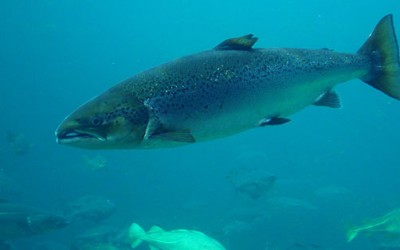
The Underwater Acoustics TC is concerned with both natural and anthropogenic sound and its generation underwater; and the propagation, reflection and scattering of sound in the underwater environment including the seabed and the sea surface. For more information, visit the Underwater Acoustics TC website!

Signal Processing in Acoustics
The Signal Processing TC promotes the interdisciplinary collaboration across acoustic specialities as well as increases and diffuses knowledge of signal processing as used in the field of acoustics. For more information, visit the Signal Processing TC website!

Noise
The Noise TC increases and diffuses knowledge of noise generation and propagation, passive and active noise control, and the effects of noise. Activities of the Committee embrace the practical and theoretical aspects of noise, in its broadest definition, in all areas of acoustics. Specific interests include the following and similar topics: sound sources, source mechanisms, propagation, perception, prediction, measurement, evaluation, analysis, effects, regulation, mitigation, and legal aspects of noise. For more information, visit the Noise TC website!

Biomedical Acoustics
The Biomedical Acoustics TC is concerned with the study of the interactions of acoustic waves with biological materials, which is relevant for diagnostic and therapeutic applications of acoustics in medicine, biological effects of exposure to vibrations and medical imaging. For more information, visit the Biomedical Acoustics TC website!

Education in Acoustics
As of 2025, Education in Acoustics is a Technical Speciality Group in the process of becoming a TC. Its mission is to promote and improve education of acoustics at all levels. For more information, visit the Education in Acoustics website!

Structural Acoustics and Vibration
The Structural Acoustics and Vibration TC includes the study of motions and interactions of mechanical systems with their environments and the methods of their measurement, analysis, and control. For more information, visit the Structural Acoustics and Vibration TC website!

Psychological and Physiological Acoustics
The Psychological and Physiological Acoustics TC is concerned with the investigation and the dissemination of information about psychological and physiological responses of humans and animals to acoustic stimuli. For more information, visit the Physiological and Psychological Acoustics TC website!

Musical Acoustics
The Musical Acoustics TC is interested in the application of science and technology to the field of music, with current interest in the physics of musical sound production, music perception and cognition, and analysis and synthesis of musical sounds and composition. For more information, visit the Musical Acoustics TC website!

Architectural Acoustics
The Architectural Acoustics TC considers room acoustics, airborne and impact transmission in building structures, airborne and structure-borne noise control, noise control of building systems and electroacoustic systems. For more information, visit the Architectural Acoustics TC website!

Acoustical Oceanography
The Acoustical Oceanography TC is concerned with the science of inferring oceanic properties (physical, biological, geological, chemical etc.) from acoustic measurements. The field is motivated by the poor propagation of electromagnetic waves in water which renders many terrestrial measurement techniques (optical, radar, microwave etc.) inadequate for oceanic measurements. The field is complicated by the large scale of the ocean, the wide range of physical and biological noise sources present and by the complexity of sound propagation in a dynamic and inhomogeneous medium. For more information, visit the Acoustical Oceanography TC website!

Speech Communication
The Speech Communication TC is concerned with the production, transmission and perception of spoken language. Both machine processing and human perception of speech are considered. For more information, visit the Speech Communication TC Website!

Computational Acoustics
The Computational Acoustics TC is concerned with the study of numerical and computational methods for studying and modeling acoustical phenomena; validation, benchmarking, and uncertainty analysis of computational models; computational learning methods, data analytics, and data visualization; and other applications of computational acoustics. For more information, visit the Computational Acoustics TC website!
Physical Acoustics
The Physical Acoustics TC is concerned with fundamental acoustic wave propagation phenomena, including transmission, reflection, refraction, interference, diffraction, scattering, absorption, dispersion of sound, and sonoluminescence. The use of acoustics to study physical properties of matter, and to produce changes in these properties, is also of interest. For more information, visit the Physical Acoustics TC website!

Engineering Acoustics
The Engineering Acoustics TC is concerned with the evolution and improvement of acoustical techniques and apparatus, and with the promotion of new applications of acoustics for useful purposes. Including transducers and arrays, acoustic instrumentation, applied sonics, audio engineering, acoustic imaging and acoustic holography. For more information, visit the Engineering Acoustics TC website!

Animal Bioacoustics
The Animal Bioacoustics TC studies the acoustic communication, sound production anatomy and auditory capacities of non-human animals as well as their behavioral responses to environmental sounds. In addition the use of acoustic techniques for population assessment, identification and behavior measurements are considered. For more information, visit the Animal Bioacoustics TC website!